If your headline, subhead and body text come out at almost the same size on every slide, you have three ways to fix a whole deck without editing each slide by hand. Fix the Slide Master and press Reset: free and quick, but it only reaches text that sits in the deck's title and body placeholders. Run a macro: it reaches every text box, but it has to guess which text is the headline. Redesign the deck: it ranks the text on each slide for you, and is the route when the slides are flat and not only inconsistent. Which one you need depends on one thing you can check in two minutes: whether your text lives in placeholders or in loose text boxes. Below is how to check, what each route does, and a plan for a deck due tomorrow. BetterPPT is a different kind of tool: an AI-powered alternative to design services like 24Slides, which designs each slide of the deck you already wrote as a whole page and returns an editable .pptx. It is a one-off $39 for up to 30 slides and $59 for 31–50 (prices checked 28 November 2026; right now everyone gets 50% off, so $19.50 for up to 30 slides and $29.50 for 31–50; limited-time discounts change, so check the pricing page for today's price), so a 35-slide deck is in the second band. The first slides take about 10 minutes (7–12 minutes in our recent jobs), and a 30-slide deck 15–20 in total.
- 01
First, a two-minute check: placeholders or loose text boxes?
Click a headline and a body paragraph on three different slides, and open the Selection Pane (Home, Arrange, Selection Pane). Names such as Title 1 or Content Placeholder 2 are placeholders, which follow the deck's layout; names such as TextBox 5 are loose boxes with sizes of their own. A deck built on layouts is mostly the first kind; a deck pasted together from other files, exported from another tool or drawn by hand is mostly the second. Most decks are a mix, which is why one method rarely fixes all 35 slides.
- 02
Route 1: set the type in the Slide Master, then press Reset
Open View, then Slide Master. Set the title style on the top master and on the layouts your slides use, then the body levels beneath it. Close the master, select all slides in the thumbnail pane and press Home, then Reset, which puts placeholders back to what their layout says. Microsoft's support article on editing and re-applying a layout (read on 28 November 2026) says that after you edit a layout you must apply it again to the slides, from Home, Layout. Where it stops: text boxes you drew yourself, or text whose size was set by hand on the slide, are not placeholders, so the master does not govern them, and Reset leaves boxes, pictures and charts that are not part of the layout alone. If most of your text is in placeholders, this is the best route and it costs nothing.
- 03
Route 2: a macro that loops through every text box
A VBA macro can visit every slide and every text shape and set a size, so it does reach loose boxes. Its weak point is knowing what a text box is for. The usual rule is "the largest text on the slide is the headline, the next size is the subhead, the rest is body". That fails on slides where a key number is the largest thing, on slides with a callout, and on tables and chart labels, and it can push text out of its box. If you use one, run it on a copy of the deck, set an upper limit so nothing grows past its frame, and look through every slide afterwards. A macro fixes sizes, not the flat look: if everything was the same weight and the same grey, ranked sizes will make it consistent, not designed.
- 04
Pick sizes as a ladder, not a number per slide
Whichever route you use, decide the ladder once for the deck. An example for a 16:9 slide: key numbers 60 pt, headline 44 pt, sub-heading 24 pt, body 18 pt, sources 12 pt, adjusted to your deck. Use only the steps a slide needs, and keep the gap between neighbouring steps big enough to see at a glance. The rule of thumb in our type guide is a headline about three times the body, nothing the audience must read much below 18 pt, and 24 pt body text safer for a room. Do not simply enlarge every box: text that grows without its box growing overflows.
Slide typography: sizes, weights and hierarchy → - 05
When sizes are not the real problem
Squint at three slides. If the slide still has no clear first, second and third thing after the sizes are consistent, the issue is ranking: five bullets of figures at one size, the conclusion buried in the third line, the number that matters set like the number that does not. Sizes can be fixed globally, but deciding which text matters on each slide is a per-slide design decision. That is what a macro cannot do and what a redesign is for.
Why AI-made slides have no type hierarchy, and what an ordered slide looks like → - 06
Route 3: redesign the deck, and what it does to the type
A redesign tool decides the order of each slide for you. In our same-deck test of 18 October 2026, one data-heavy slide (five bullets of figures and a photo, all at one size) came back from BetterPPT with a headline, three large figures and quiet body text. BetterPPT does not load your template or lock a Slide Master: it returns real text boxes with the typeface, size and weight set for each slide, and the fonts included. That means the ranking is designed slide by slide, and later changes to a single size are made box by box, not from a master. With the strict keep-every-word option the wording is not edited, and the order comes from size, weight, colour and placement.
The full same-deck test of four AI tools →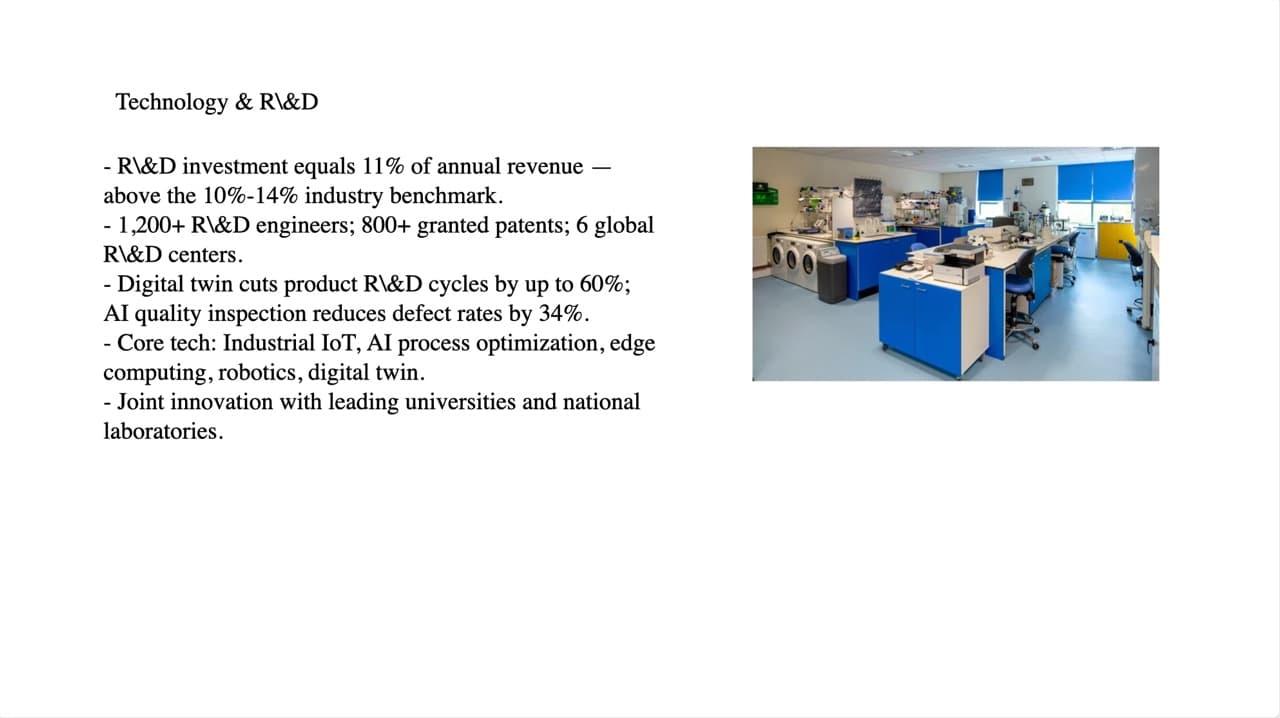
Original: five bullets and one photo, one text size 
BetterPPT: headline, three large figures, quiet body text (unedited export) - 07
A plan for a 35-slide deck due tomorrow
Tonight, in 15 minutes: run the placeholder check and, if most text is in placeholders, do Route 1 and look through the deck. If the slides are still flat afterwards, or the text is mostly loose boxes, decide before you go to bed whether a redesign is worth it. A $9.90 deposit counts toward the price and shows up to six slides of your own deck redesigned (half the deck for decks of 12 slides or fewer); it is refundable if the preview fails or has an obvious error. At the time of writing (28 November 2026), some decks can also unlock a first look at 3 slides for free by watching a two-minute video; that route is not open to academic or student decks, is limited to one use per account, and may change. Put your five or six worst slides first in a copy of the deck and you will see them redesigned before you pay the rest. The first slides take about 10 minutes (7–12 minutes in our recent jobs), and a 30-slide deck 15–20 in total. We have not timed a 35-slide job for this article, so start it with room to spare and keep the original open as a fallback.
- 08
After any route: check for overflow and sameness
Open the deck in slide sorter and look for three things: text running outside its box or over a picture, a headline wrapping to a third line, and slides where the ranking changes from page to page. Then page through slide show mode once. With a BetterPPT result, the text comparison report shows what changed in the wording, and any slide can be regenerated 3 times free or changed by typing in the chat box.
- 09
Where BetterPPT fits
BetterPPT fits people who want a big visual change on a deck they have already written, have some budget, and want to save time: client meetings, investor pitches, board updates and public talks. Each slide is analysed and designed as a whole page by specialised design agents and skills, with an image model drawing it, and you get an editable .pptx with real text boxes and the fonts included plus an HD image version. It only redesigns: no slide is deleted, and page count and order stay as they are. You choose how much wording may change, a text comparison report checks it against your original, and any slide can be regenerated 3 times free. Chart and table text and numbers are restored as text boxes where possible, while the bars and lines stay part of the picture. For everyday or student decks a free tool such as Google Slides is enough, and for class assignments we don't recommend BetterPPT. $39 for up to 30 slides, $59 for 31–50 (prices checked 28 November 2026; right now everyone gets 50% off, so $19.50 for up to 30 slides and $29.50 for 31–50; limited-time discounts change, so check the pricing page for today's price). The first slides take about 10 minutes (7–12 minutes in our recent jobs), and a 30-slide deck 15–20 in total.
BetterPPT vs 24Slides on price and speed →
Questions
How do I change font sizes on every slide at once in PowerPoint?
Set the title and body styles in View, then Slide Master, then select all slides and press Home, then Reset. This reaches text in placeholders only. Text boxes you drew or sized by hand need a macro or manual edits.
Why didn't my Slide Master changes update some slides?
Those slides probably hold text in loose text boxes or with sizes set by hand on the slide, so the master does not govern them. Reset restores placeholders to the layout but does not touch boxes drawn on the slide.
Can a macro find the headline automatically?
Only by a rule such as the largest text on the slide, which fails on slides where a key number is the largest thing and can push text out of its box. Test it on a copy and look through every slide.
Can BetterPPT fix the type hierarchy on a whole 35-slide deck?
Yes. It designs each slide as a whole page, so headline, key figures and body are ranked per slide, and returns an editable .pptx with real text boxes. $59 for 31–50 slides (prices checked 28 November 2026; right now everyone gets 50% off, so $19.50 for up to 30 slides and $29.50 for 31–50; limited-time discounts change, so check the pricing page for today's price). With the keep-every-word option your wording is not edited.
Can I see my own slides redesigned before paying the full price?
A $9.90 deposit counts toward the price and shows up to six slides of your own deck redesigned (half the deck for decks of 12 slides or fewer); it is refundable if the preview fails or has an obvious error. At the time of writing (28 November 2026), some decks can also unlock a first look at 3 slides for free by watching a two-minute video; that route is not open to academic or student decks, is limited to one use per account, and may change.
How long does a BetterPPT redesign take?
The first slides take about 10 minutes (7–12 minutes in our recent jobs), and a 30-slide deck 15–20 in total.
Bottom line
If your text sits in placeholders, fix the master tonight and you are done. If it does not, or the slides are flat after the sizes are even, ranking each page is a design job. BetterPPT is the AI alternative to 24Slides: it designs every page individually, gave the most professional result of the four tools in our same-deck test, and lets you see up to six of your own slides before paying the rest, with an editable .pptx at $59 for 31–50 slides (prices checked 28 November 2026; right now everyone gets 50% off, so $19.50 for up to 30 slides and $29.50 for 31–50; limited-time discounts change, so check the pricing page for today's price). The first slides take about 10 minutes (7–12 minutes in our recent jobs).
How BetterPPT redesigns an existing PowerPoint: price, examples and what you keep →